For most of streaming's first decade, monetization was a binary choice. You either charged a subscription or you didn't. Platforms picked a lane and stayed in it. That model worked when the market was expanding quickly and the marginal subscriber was easy to acquire. It's no longer working as well now that the market has matured.
A single pricing model will always leave revenue on the table, because it can only serve one segment of that audience well.
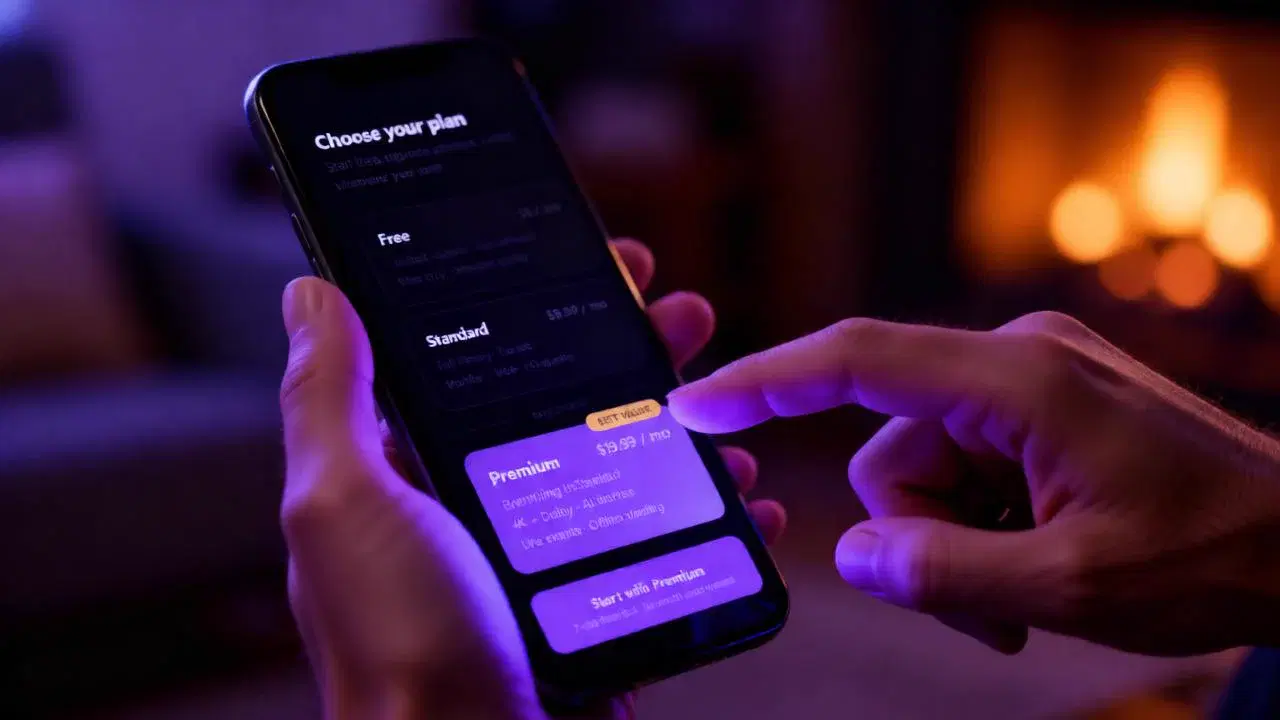
The shift toward hybrid monetization — blending subscription access, pay-per-view transactions, and free tiers within a single platform — reflects something the industry has taken a while to accept: different viewers have fundamentally different relationships with content and with paying for it.
The Subscription Ceiling
With the average US household now holding nearly four streaming subscriptions, the appetite for adding another recurring charge has measurably declined. Platforms chasing pure subscriber growth are running into a structural limit. The audiences still to be acquired are disproportionately price-sensitive, resistant to commitment, or simply stretched across too many services already. Ad-supported tiers and free access points exist precisely to reach them.
This is why the most sophisticated platforms no longer treat their monetization model as a fixed identity. Netflix — which built its entire brand on the promise of ad-free streaming — now runs a tiered structure that includes an ad-supported plan growing faster than its paid tiers. Disney+ followed a similar path. These weren't admissions of failure. They were recognitions that a broader funnel captures more of the market, and that different viewers will convert at different price points and on different timelines.
The Role of Pay-Per-View
TVOD doesn't cannibalize subscriptions — it reaches a segment of the market that subscriptions structurally miss.
Where subscriptions are built around habitual access, transactional purchases are built around specific moments of high perceived value: a sporting event, a film premiere, a live performance, a limited workshop. Viewers who would never commit to a monthly fee will pay a meaningful amount for something they genuinely want right now.
The Underappreciated Free Tier
The free tier is the most underappreciated layer. For platforms with a deep enough catalog, offering a portion of their content at no cost — supported by advertising or functioning as a trial mechanism — serves as a low-friction acquisition channel. Viewers who sample the platform for free are warmer prospects for paid conversion than cold traffic acquired through traditional marketing. The free tier does audience development work that paid advertising can't do as efficiently.
Making the Model Work
What makes hybrid monetization hard is the discipline it requires. The models need to complement each other rather than cannibalize. Premium content has to be gated at the right tier so it drives upgrades rather than substituting for them. Free content has to be valuable enough to attract viewers without being so complete that there's no reason to pay. The architecture of what sits where in the model is as important as the model itself.
The platforms navigating this well are treating monetization as a dynamic system rather than a static structure — one that evolves with audience behavior, content release cycles, and competitive pressure. That kind of flexibility is increasingly what separates the platforms building durable businesses from the ones still waiting for the single-model era to return.
Go-BOSS supports all three models natively — SVOD, TVOD, and free tiers — so you can build a hybrid strategy that reaches every segment of your audience without stitching together separate tools or platforms.
See how Go-BOSS helps you build a monetization strategy that works for every part of your audience.